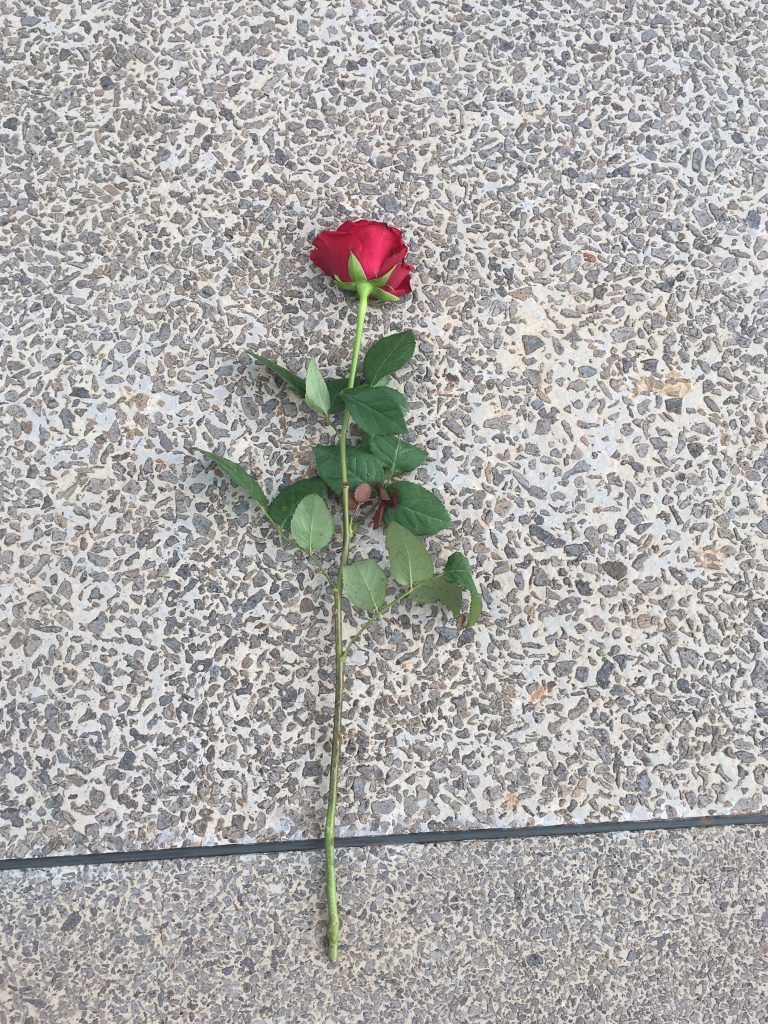
In the spring of 1994, over the course of 100 days, one million Rwandans were murdered. 10,000 people a day were killed by militias encouraged and supported by the government. Most North Americans only know this story through a handful of news reports and Don Cheadle’s movie. So it is understandable that our plan to travel to Rwanda was met with much disbelief and concern from our friends and family. Why on earth would we choose to take our young family to such a horrific place?
The history is indeed horrific. One in eight Rwandans were slaughtered that spring. There is a grave in Kigali that holds the remains of 250,000 victims. Toddlers were bludgeoned to death. Churches were bulldozed while victims sought shelter within. Machete wielding militias left corpses littering the streets. The history is horrific.
But the place, the country is not. Rwanda is not the genocide. Rwanda is a survivor of the genocide. The entire country is a victim of trauma, and to witness how it has chosen to heal is inspiring.
How these people can overcome the desire for revenge astonishes me. I doubt I could. When questioned on the topic our safari driver (who was made an orphan at the 10 by the militias) responded “We have no choice, we can not tolerate more killings, more death”.
Every April there is a week of national mourning, citizens attend Kwibuka sessions in their villages where they discuss and share their genocide stories, trying to heal. Tribal identity is no longer recognized; no Tutsi, no Hutu only Rwandans.
 We did not take the kids into the memorial. Because of the graphic nature of the exhibits, children under 12 are not admitted. But of course they had questions, “What does genocide mean? How does something like that happen”?
Genocide is the horrible end of an ethos of “the other”. The mindset of Us versus Them. The scapegoating of all of your problems on a marginalized group. Of slowly demonizing that group until they’re not even human, then trying to get rid of them with the hope that your problems will go away too. It’s so much easier to hate a disenfranchised group than a broken system. Rwanda’s genocide is a lesson in how this mindset fails everyone and Rwanda’s recovery is a lesson in how unity is the only real hope.
That’s why we took our kids to Rwanda. I hope they learned the lesson. I hope we all can.


 Around 5000 feet, the topography of western Rwanda reminds me a lot of Appalachia. However, being situated on the equator the curvature of these hills are clothed in a very different flora. In place of the mixed temperate forests of NC or VA, these mountains play host to a more tropical variety. Immediately outside of the capital, the land is parceled in an endless quiltwork of gardens, and small subsistence farms. Broad leaved-banana trees surround homes and run up to plots of corn, peas, sweet potato, melons, cassava. There are stands of bamboo, avocado trees, passion fruit vines. The valley floors are all sectioned into rectangled rice paddies. If any naked earth shows it is the red dirt of my childhood in GA. Shades of green and red are the dominant palate of these hills.

 At 5000 Rwandan Francs (RWF) for a cross-town ride, taxis occupy the top spot in the food chain of transport. No real difference from those at home, assuming your stateside taxi has mirrors held on by zip ties and worn springs that bottom the car out on every bump. Jen normally takes the front seat because of her superior French, however, most of the drivers only speak Kinyarwanda, so the ride often devolves into frustrated pointing at a phone map.
  option. For 1000 RWF (helmet included) you can hop on the back of one of these motorcycle taxis and zip across town, weaving in and out of traffic, in an affront to local traffic laws and every nuanced clause of your travel insurance policy. Arriving at your destination vibrating from adrenaline and itching from the community helmet are just part of the experience.
 one can look serious riding shotgun on the back of a bike, legs held out to the sides in a tin-man pose. It’s like trying to look mad while sipping out of a straw.


