I guess I never really thought much about what the southwest would smell like. Certainly if asked prior to our time here, I would not have expected there to be a varied palate in that specific sense department. Pictures of dry arroyos, sun-baked adobe and gravel yards adorned with cacti did not prepare me for the exquisite experience of standing in a field of sage after a September thunderstorm. Or the almost boozy vanilla scent when you dare to put your nose to the bark of a ponderosa pine. The familiar Christmas smell of the spruce-fir forests higher up the mountains was really no surprise, but who knew spring in town would bring a sticky-sweet perfume as apricot trees bloomed ripened and dropped their fruit all along my bike route to work. And now as summer segues into fall, the smell of roasting chilis dominates. It is as exotic to me as my first whiff of fish sauce or sandalwood. A mixed smell of brushfire and grilled veg, it is a dark odor that nibbles the back of the throat.
Twenty-pound sacks of fresh green chilis are available at the grocery, and roasting vendors are set up in parking lots throughout the city. So much for the SW being barren.
Supposedly smell is the oldest sense and the one most likely to trigger memories. As we head east, away from Santa Fe, I’m happy to think back on the many unique and new smells here, and the memories waiting to be triggered.
Smell you later, Santa Fe.
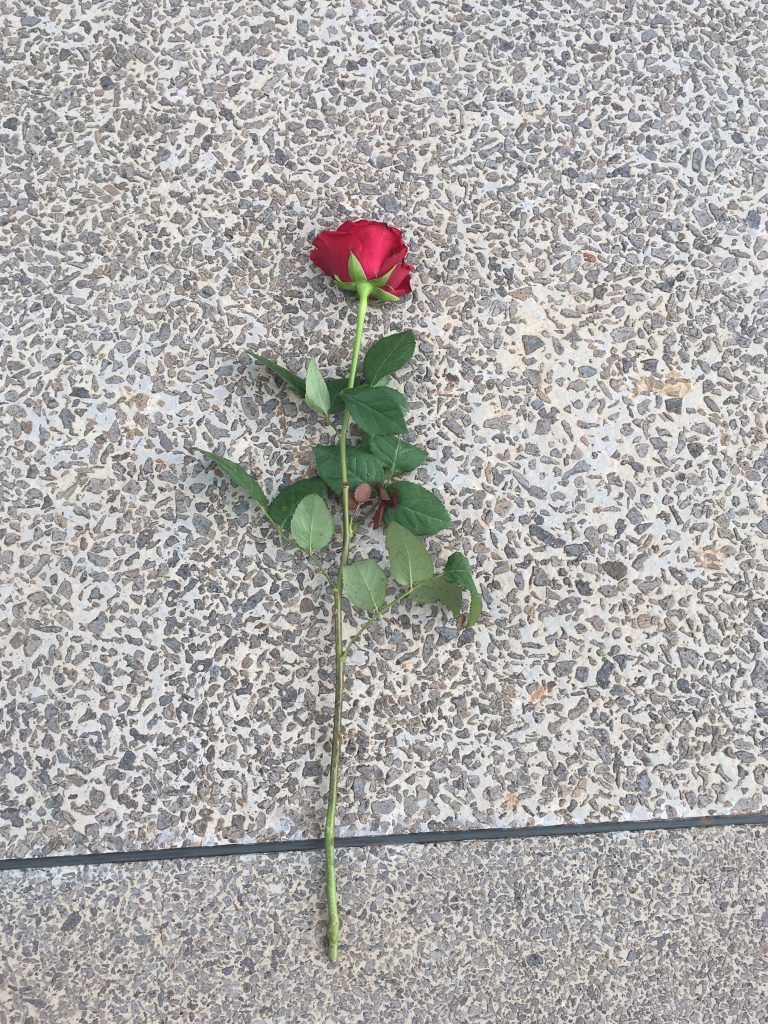
 We did not take the kids into the memorial. Because of the graphic nature of the exhibits, children under 12 are not admitted. But of course they had questions, “What does genocide mean? How does something like that happen”?


 Around 5000 feet, the topography of western Rwanda reminds me a lot of Appalachia. However, being situated on the equator the curvature of these hills are clothed in a very different flora. In place of the mixed temperate forests of NC or VA, these mountains play host to a more tropical variety. Immediately outside of the capital, the land is parceled in an endless quiltwork of gardens, and small subsistence farms. Broad leaved-banana trees surround homes and run up to plots of corn, peas, sweet potato, melons, cassava. There are stands of bamboo, avocado trees, passion fruit vines. The valley floors are all sectioned into rectangled rice paddies. If any naked earth shows it is the red dirt of my childhood in GA. Shades of green and red are the dominant palate of these hills.

 At 5000 Rwandan Francs (RWF) for a cross-town ride, taxis occupy the top spot in the food chain of transport. No real difference from those at home, assuming your stateside taxi has mirrors held on by zip ties and worn springs that bottom the car out on every bump. Jen normally takes the front seat because of her superior French, however, most of the drivers only speak Kinyarwanda, so the ride often devolves into frustrated pointing at a phone map.
  option. For 1000 RWF (helmet included) you can hop on the back of one of these motorcycle taxis and zip across town, weaving in and out of traffic, in an affront to local traffic laws and every nuanced clause of your travel insurance policy. Arriving at your destination vibrating from adrenaline and itching from the community helmet are just part of the experience.
 one can look serious riding shotgun on the back of a bike, legs held out to the sides in a tin-man pose. It’s like trying to look mad while sipping out of a straw.
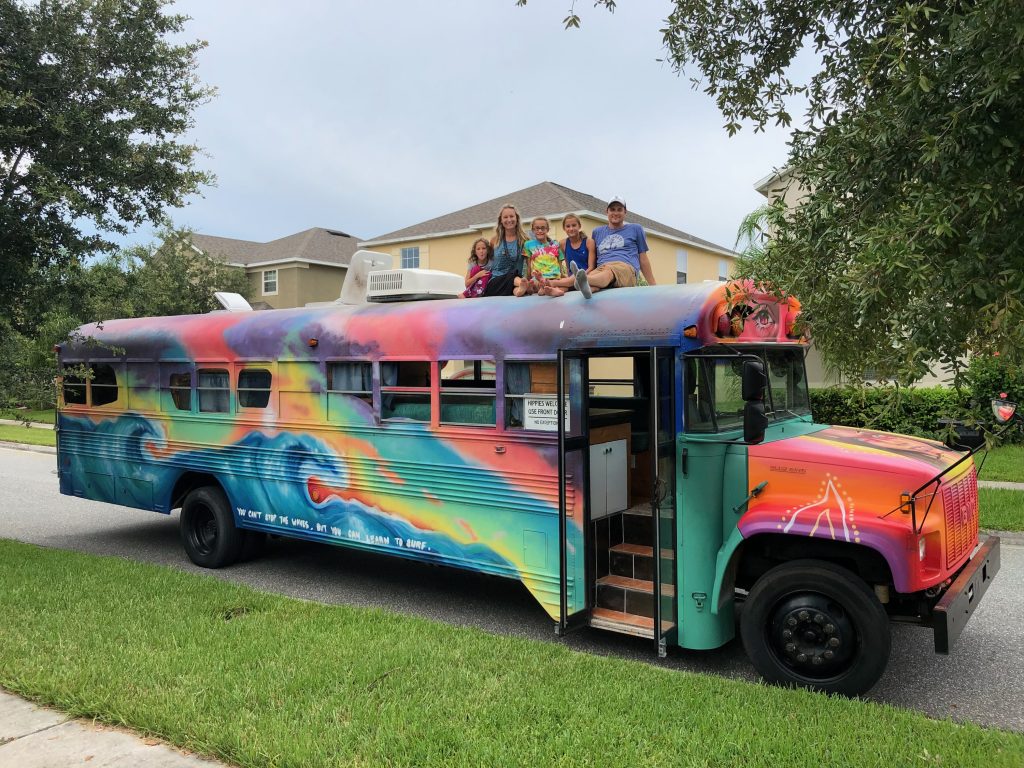
 The better part of a weekend was spent with them, learning their story, and the story of the bus. Stella and their daughter Piper played Barbies. The big kids all went to a chalk-art contest together. In between bus questions, we discussed everything from homeschooling strategies to instapot recipes. We really got to know this sweet family, so it was with a slight sense of guilt that I drove off with their house Sunday afternoon, leaving them with all of their belongings, in a pile, at their empty campsite.


 throughout the Himilaya and is the one we adopted.


